A Map Is a Set of Decisions
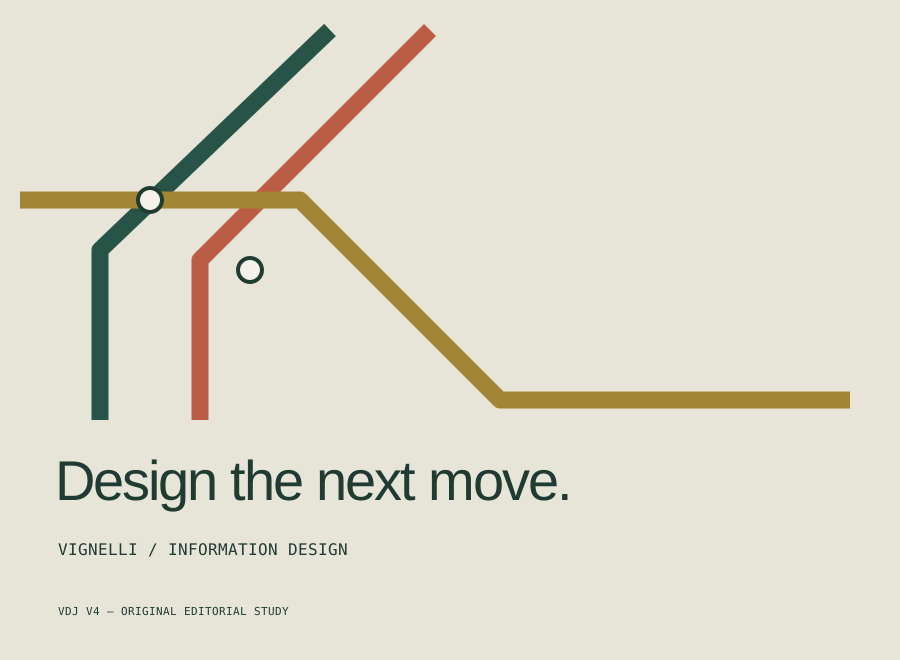
A map cannot show everything. Its usefulness depends on deciding what a person needs to know, and what can temporarily disappear. The same problem sits inside a timetable, a museum guide, a checkout flow, and an archive index. Design begins by choosing which decisions the interface should support.
The New York Transit Museum dates the debut of the Unimark subway map to August 1972. Its exhibition credits Massimo Vignelli, Bob Noorda, Joan Charysyn, and the wider design effort. Straightened routes and reduced topographic detail created a diagram of relationships rather than a complete picture of the city.
That distinction is the starting point for our reading. Geographic resemblance and navigational clarity are different goals. A rider choosing where to change trains needs connections to be legible. A pedestrian leaving a station also needs a relationship to streets, distance, and direction. A useful abstraction for one task can be a limitation for the next.
Think of a route diagram as an argument about attention. Repeating line angles reduces visual variation. Repeating station symbols makes different locations comparable. Colour separates services without forcing every label to do all the work. Each decision makes some relationships easier to see, while pushing other information into the background.
A designer can test that argument with a small exercise. Choose one journey and write down three questions a traveller must answer. Where do I start? Where do I change? Where do I leave the system? Mark every visual element that helps answer those questions. Then check what the diagram fails to explain after the final stop.
The exercise applies beyond maps. On a website, a category label helps a reader choose a direction, but it may not explain what they will find. A clear listing page can still lead to a confusing detail page. The transitions between views deserve the same care as the views themselves.
The point is not that simplification is always better. It is that omissions need a purpose. A system should be judged against the situations it is meant to serve, including moments of uncertainty. Vignelli and his collaborators give us a rich case for studying that trade-off, rather than a style to apply without question.
Comments (0)
- No comments yet. Start the conversation.